
QUICK ANSWER
Out-of-state investing in Las Vegas works when it is done systematically, with a local team that handles financing, acquisition, and property management inside one accountable structure. The investors who struggle here are not uninformed. They trusted the wrong people from 800 miles away. Here is what the right setup looks like, and how to tell the difference.
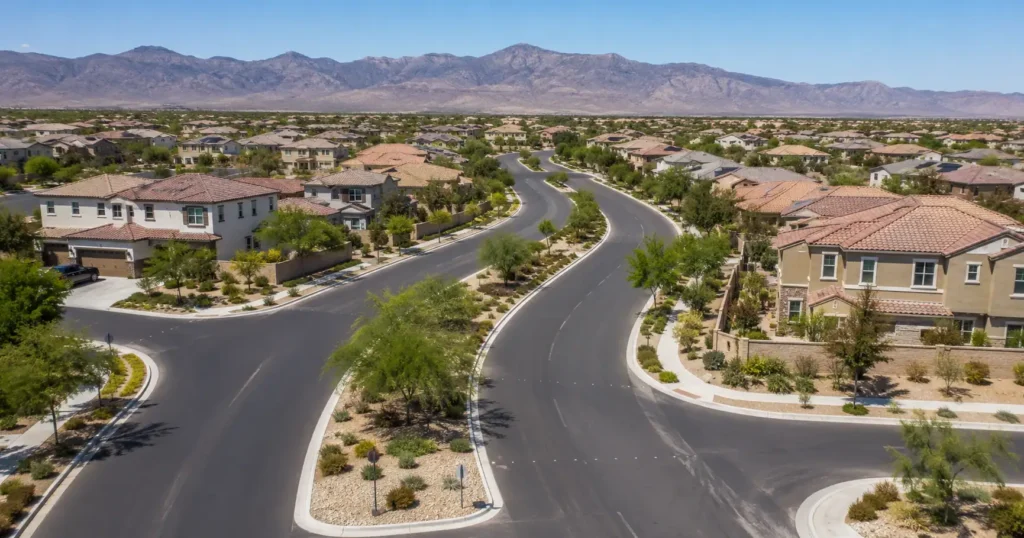
You have done enough research to know Las Vegas is a legitimate market. No Nevada state income tax. 44 percent of Las Vegas households are renter-occupied.¹ The valley’s economy has diversified beyond the Strip into logistics, healthcare, professional services, and a growing professional sports sector.
What you have not figured out is who to trust to be your eyes when you cannot be there yourself.
That is the actual question. And it is the right one to start with.
Why the Distance Problem Is the Real Problem
Out-of-state investing is not inherently risky. It is risky when it is done on gut feel, with a patchwork of vendors who do not communicate, and no one responsible for the full picture.
The forum threads that describe failed remote investments share a pattern. The property manager who stopped returning calls. The inspection that missed the HVAC issue. The acquisition agent who handed the deal off to a stranger at closing and was never heard from again.
None of those are Las Vegas-specific problems. They are team structure problems. The market does not make deals fail. Disconnected, unaccountable teams do.
More than 53,200 people moved from California to Nevada in 2024, according to Census Bureau state-to-state migration data.² Many close on investment properties without a single in-person visit. The ones who do it well have one thing in common: a local team where financing, acquisition, and property management stay inside the same conversation, start to finish.
That structure is not a nice-to-have. It is the direct answer to the distance problem.
What You Need a Local Team to Actually Do
A local team is not a convenience for an out-of-state investor. It is the job. Here is what that specifically means.
Honest video walkthroughs, not highlight reels. Photos and square footage do not tell you about the noise environment, the HOA culture, the street-level condition of the neighborhood, or how the property compares to what is available nearby. You need someone whose job is to show you what you would see if you were standing there. Not what makes the listing look good.
Neighborhood context you cannot get from a screen. Two properties can look nearly identical on a spreadsheet but perform very differently as rentals. The difference is almost always in the neighborhood details that no listing shows: proximity to employment centers, school quality, tenant retention drivers, and days-on-market for comparable properties. Your team should give you that picture before you are attached to a property.
A transparent operating model before you make any decision. Cap rate and gross yield are starting points. The investors who underperform in Las Vegas are usually the ones whose spreadsheet looked right and whose actual numbers did not. HOA fees, HVAC reserves, pool and desert landscaping maintenance, and a realistic vacancy allowance calibrated to the specific submarket all belong in the model before you are under contract.
A property manager who is already part of the conversation at the start. Not someone you are introduced to after closing. The property manager who vanished is what happens when the acquisition team hands you off to a stranger with no accountability. The right structure: the same team that underwrites the deal manages the property afterward. One conversation. No gaps.
How to Evaluate a Las Vegas Property from a Distance
Step One: Understand the submarket before you commit to a specific property. Las Vegas is not one market. Henderson and Summerlin have historically shown stronger occupancy and rent stability than other parts of the valley. Case in point: according to the Innovative Real Estate Strategies 2026 rental market report, rent growth in Henderson has remained above the metro average, and the single-family vacancy rate is described as among the lowest in the valley.³ City-wide statistics do not drive returns. Neighborhood-level data does.
Step Two: Get the full operating model before you fall in love with any listing. Every line matters: property taxes at Clark County’s assessed value structure (35 percent of taxable value⁴), verified HOA fees for the specific community, management fees at the Nevada market average of 8.57 percent of collected rent,⁵ a maintenance reserve weighted for HVAC age, and a vacancy allowance calibrated to current submarket conditions.
Step Three: Request honest video walkthroughs and neighborhood context. Not a highlight reel. The street. The surrounding blocks. Comparable vacancy rates nearby. You are the decision-maker. Your team is your eyes.
Step Four: Vet the property management structure before you close, not after. Ask specifically: how are maintenance requests handled when the air conditioning fails during a Las Vegas summer? What does their tenant screening process include? What does their reporting look like? Rice Real Estate’s 2026 market data shows rental inventory at roughly a 1.5-month supply in the Las Vegas and Henderson single-family market — a tight environment that rewards active management and penalizes slow response.⁶
Step Five: Close with confidence, not assumption. When the team, the data, and the operating model are right, the distance is manageable. When they are not, being on-site would not save you either.
Have a property in mind? We will run the numbers on it.
Send us the address, asking price, and your target rent, and Plurify will build the full operating model: HOA verified, vacancy calibrated to the submarket, management fees included. Before you are attached to it.
Book a free 20-minute call at PlurifyProperties.com, or email the details and we will respond within one business day.
The Financing Structure for Out-of-State Buyers
Remote investors in Las Vegas primarily use two loan structures.
Conventional financing works best for investors with strong W-2 income, solid credit, and straightforward documentation. Minimum down payment is typically 20 to 25 percent. Rates are slightly higher than owner-occupied pricing due to the investment classification.
DSCR (Debt Service Coverage Ratio) loans are the dominant structure for out-of-state and self-employed investors because qualification is based on the property’s rental income rather than the borrower’s personal income documentation. No W-2s or tax returns required.
The qualifying threshold most lenders apply: a DSCR of 1.0 means rent exactly covers the full payment including principal, interest, taxes, insurance, and HOA. A ratio of 1.25 or above unlocks the best terms. Credit score requirements typically start at 620, with better pricing above 700. Down payment runs 20 to 25 percent. These requirements are consistent with 2026 lender standards surveyed by iQRATE Mortgages, Griffin Funding, and New American Funding.⁷
What the Right Las Vegas Team Looks Like
A buyer’s agent who specializes in investment properties and knows Las Vegas at the neighborhood level. Someone who can tell you the difference between what Henderson’s established corridors are doing versus parts of the valley where recent supply increases have changed the leasing picture.
An inspector experienced with Las Vegas-specific issues. Foundation settlement in some 2000s-era developments. Stucco condition. Aging HVAC systems running hard in sustained summer heat. These are specific failure modes that drive up unexpected costs fast.
A lender with Nevada investment financing experience, specifically including DSCR structures.
A property manager with a vendor network already in place before you close. Not one being assembled after you have a problem. The average management fee in Nevada is 8.57 percent of collected rent, with tenant placement fees averaging 77.1 percent of one month’s rent and lease renewal fees averaging $200.58.⁵
The strongest setup is one where all four of those roles operate inside the same team structure. No handoffs. No gaps between stages. That is how Plurify is built.
Which Las Vegas submarket fits your numbers?
Share your price point, target yield, and hold strategy, and Plurify will tell you which submarkets to look at first. No call required. We will respond within one business day.
Frequently Asked Questions
Q1:- Is Las Vegas a good market for out-of-state investors in 2026?
Ans:- Yes, with conditions. Nevada has no state income tax. The Las Vegas metro median listing price was $474,950 as of April 2026, per Realtor.com data via the Federal Reserve.⁸ Roughly 44 percent of Las Vegas households are renter-occupied.¹ The easy-cash-flow environment of 2021 to 2022 is over. Investors who underwrite carefully and have professional property management in place continue to perform.
Q2:- Do I need to visit Las Vegas before buying?
Ans:- No. Many Plurify clients close without a single in-person visit. A process built for remote buyers gives you honest video walkthroughs, neighborhood context you cannot get from a listing, and transparent communication throughout. What matters is not whether you visit. It is whether your team can actually be your eyes on the ground.
Q3:- What is the typical ROI for Las Vegas investment properties?
Ans:- Gross cap rates for Las Vegas rental properties typically range from 4 to 6 percent, with net yields after property management, maintenance, taxes, and insurance landing lower depending on submarket and purchase price.⁹ Investors who model conservatively and account for Las Vegas-specific expenses tend to see returns consistent with their projections.
Q4:- Can I get financing as an out-of-state investor?
Ans:- Yes. Remote investors in Las Vegas typically use conventional financing or DSCR loans, which qualify based on the property’s rental income rather than personal income documentation. Down payment requirements run 20 to 25 percent for most investor loan products.⁷
Q5:- What are the biggest risks of investing in Las Vegas from out of state?
Ans:- Buying at the metro level without submarket analysis. Choosing a property manager without vetting their systems. Underestimating Las Vegas-specific operating costs: HOA fees, HVAC cycles, desert landscaping. Miscalculating returns with optimistic vacancy projections. Operating without a coordinated local team. None of these is unavoidable. All require deliberate work to address.
Working With Plurify Properties
Plurify Properties is a Las Vegas investor concierge. Financing, acquisition, and long-term property management is available through one in-house team. You will never be handed off to a stranger.
We start with education, not listings. If the numbers do not pencil, we tell you before you are attached to the deal. The same team that underwrites the property with you can manage it after you close.
This is your money. We treat it that way.
In 20 minutes, Plurify can tell you whether a property you are considering pencils at current Las Vegas operating costs, which submarket fits your return requirements, and what a realistic hold looks like for your situation.
Legal Disclaimer:- This article is informational and does not constitute legal, tax, or investment advice. Market conditions change. Consult a licensed Nevada real estate professional, attorney, and tax advisor before making investment decisions.
References
- RentCafe Market Analysis / Yardi Matrix / U.S. Census Bureau, “Average Rent in Las Vegas, NV: 2026 Rent Prices by Neighborhood,” rentcafe.com, last updated April 22, 2026. Renter-occupied households: 108,244, or 44% of Las Vegas households.
- Nevada Current / U.S. Census Bureau, “Psst… on a percentage basis, more Nevadans move to California than the other way around,” nevadacurrent.com, January 22, 2026. Census Bureau state-to-state migration statistics: more than 53,200 people moved from California to Nevada in 2024.
- Innovative Real Estate Strategies, “Las Vegas Rental Market Report 2026: What Landlords Need to Know,” iresvegas.com, March 6, 2026. Henderson submarket performance, rent growth above metro average, single-family occupancy.
- SmartAsset / Nevada Revised Statutes, “Nevada Property Tax Calculator,” smartasset.com. Nevada assessed value equals 35% of taxable value per NRS. Tax abatement caps: 3% for primary residences, up to 8% for investment properties.
- iPropertyManagement.com, “Average Property Management Fees (2026): by Type & by State,” ipropertymanagement.com. Nevada average management fee: 8.57% of collected rent. Tenant placement average: 77.1% of one month’s rent. Lease renewal fees: average $200.58.
- Rice Real Estate & Property Management, “Las Vegas Rental Market Statistics 2026–2027,” ricelasvegas.com. Single-family rental inventory at approximately 1.5 months supply; market tightening signals.
- New American Funding, “DSCR Loan,” newamericanfunding.com, 2026; Griffin Funding, “DSCR Loans 2026,” griffinfunding.com; iQRATE Mortgages, “Your First DSCR Loan Guide for Las Vegas, Nevada,” iqratemortgages.com, February 2026. Consistent across sources: minimum 620 credit score, 20–25% down payment, minimum DSCR 1.0, 1.25+ for best terms.
- Federal Reserve Bank of St. Louis / Realtor.com, “Housing Inventory: Median Listing Price in Las Vegas-Henderson-Paradise, NV,” fred.stlouisfed.org. April 2026 median listing price: $474,950.
- The Brenku Team, “Las Vegas Housing Market 2025: Prices, Inventory & DOM Guide,” thebrenkusteam.com. Cap rates for Las Vegas rental properties typically range from 4% to 6% gross; net yields 2%–4% after full expenses.